Table Of Content
Table of Contents
In a world where brands bend over-optimize themselves to be politically correct, emotionally safe and algorithm-friendly, very few have dared to defy the norms and venture down an extraordinary path. These trailblazers haven’t merely taken the unusual path but embarked on a wildly unhinged journey that shatters convention.
In this blog, we don’t just talk about the usual marketing success stories, but delve into the bizarre tales about an owl that met a tragic fate and a burger that entreats people to brutally sacrifice their friends.
Duolingo’s Viral Marketing Campaign: How a Green Owl Took Over TikTok
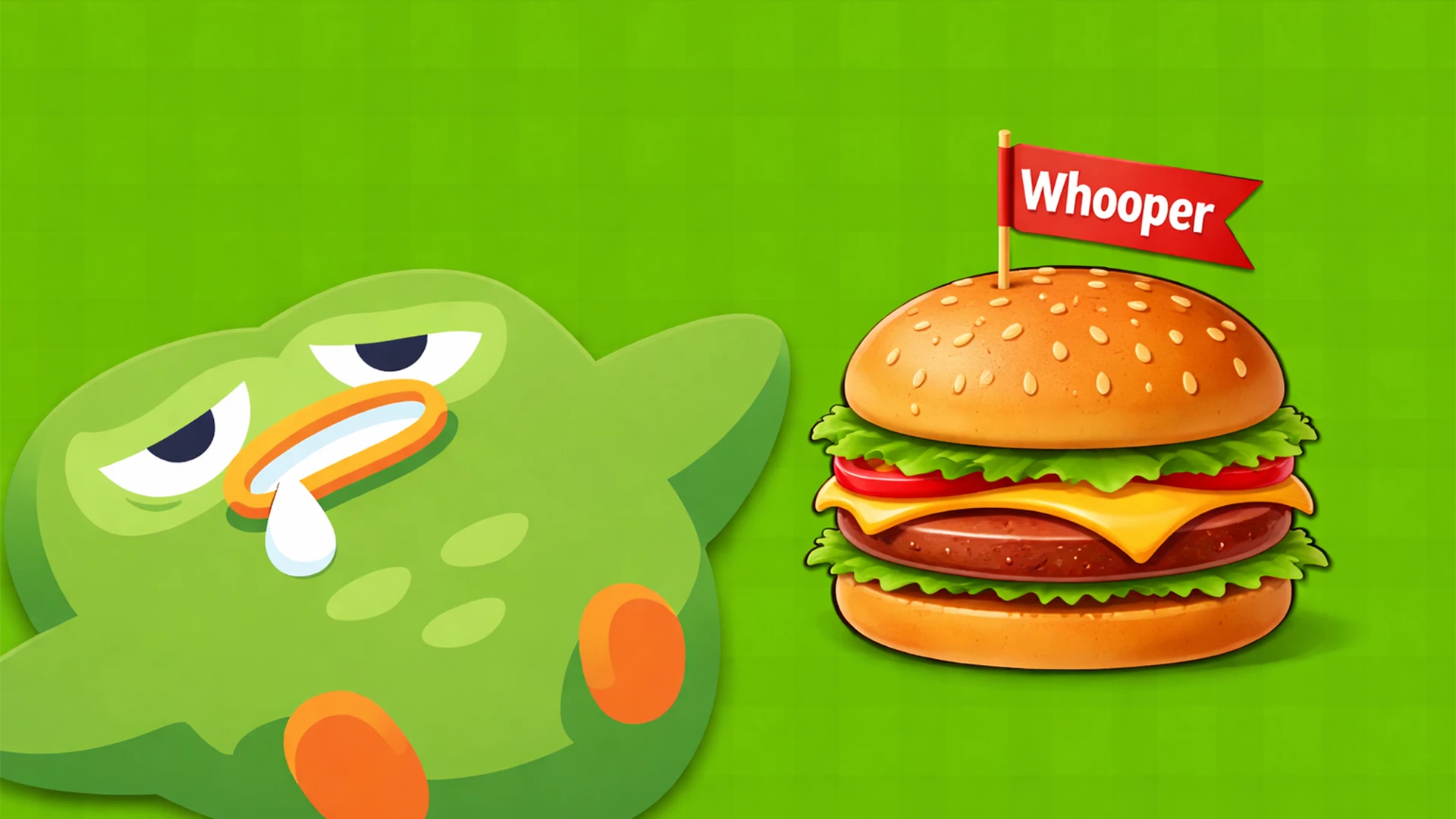
One such brand is Duolingo. What began as a humble language learning app has evolved into a cultural icon with Duo, a passive-aggressive green owl that haunts your dreams if you skip your language lessons. This quirky avian figure with its wide eyes and relentless encouragement has become both a symbol of motivation and a source of anxiety for countless learners.
But then one day ….. Duo died.
Yes, the beloved green owl was gone, snuffed out in a terrible car accident. Murdered in cold green feathers!
In a TikTok video shared by Duolingo in 2024, the company depicted a grim scenario with its beloved mascot lying lifeless in a bustling office, surrounded by stunned coworkers, crime-scene tape, and even a mock “investigation” series. Was it the intern? French grammar? Or karma?
How Fans Reacted Online to Duolingo’s Death Stunt
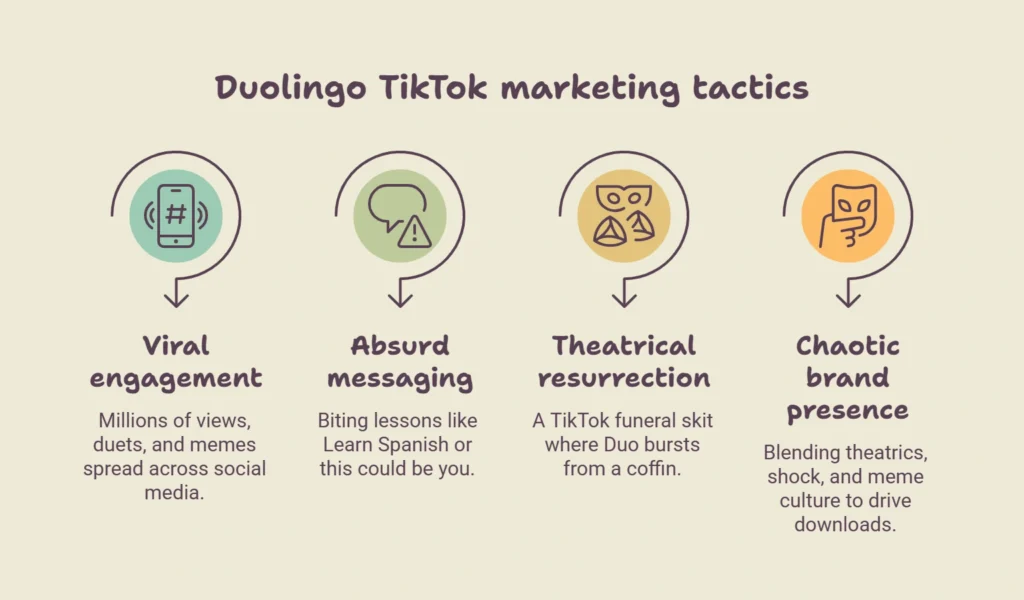
People went feral over this. Millions of views poured in; fans created endless duets and memes that spread like wildfire across social media. The comment section turned into a lawless courtroom, filled with debates as passionate as they were chaotic. Just when the world seemed to be collectively mourning the demise of its toxic green accountability partner, Duolingo surprised everyone with a biting lesson:
> “Learn Spanish. Or this could be you.”
It was absurd and ridiculous. Yet there was something undeniably iconic about it all.
And more importantly, it worked. Engagement numbers were at an all-time high, while downloads surged dramatically.
Eventually, Duo was resurrected, in true Duolingo fashion. The revival came in the form of a TikTok funeral skit, complete with mourning employees, flower arrangements, and a solemn eulogy. Midway through the ceremony, the coffin burst open and Duo emerged, very much alive, and dancing!
The absurdity was intentional. The video blended theatrics, shock, and meme culture with such precision that it went viral immediately. Fans flooded the comments, expressing relief, making jokes, and declarations of loyalty. The resurrection wasn’t just a return; it was a triumphant encore that sealed the brand’s role as TikTok’s most chaotic, yet beloved, corporate presence.
Lessons from Duolingo: How Unhinged Marketing Drives Viral Success
The key takeaway? Just because it’s unhinged doesn’t mean it lacks a well-thought-out plan.
Duolingo knows its audience well: the chaotic spirits of Gen Z, who struggle to commit and possess a penchant for dark humour. The self-fulfilling “death” meme wasn’t a gimmick, but an act of willful descent into the absurd — an audacious choice which led to viral success.
Burger King’s Bold Marketing Stunt: Sacrifice Your Friends for a Whopper
Meanwhile, Burger King Asked You to Sacrifice a Friend
And people did it. They went along with it, gleefully.
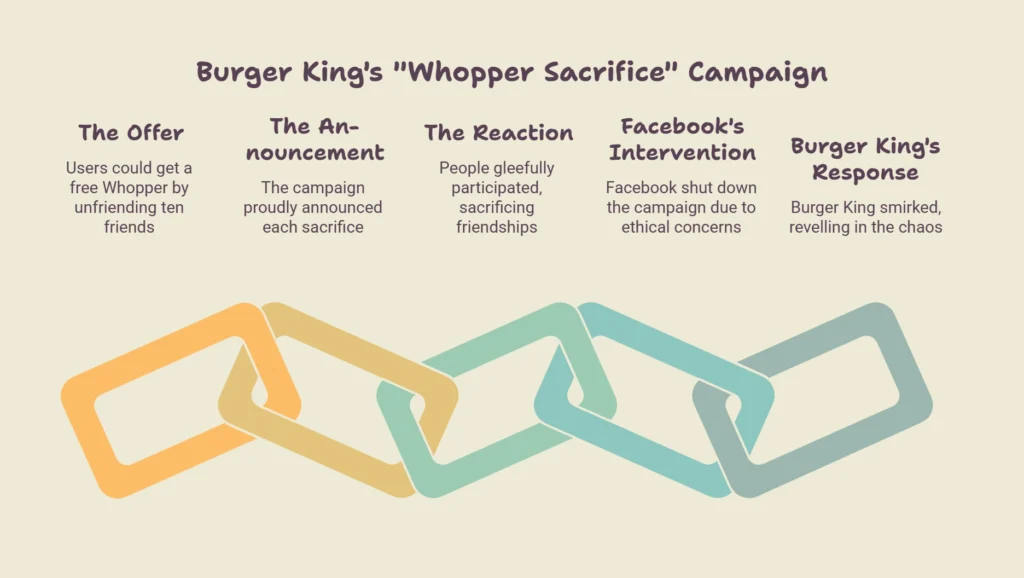
In 2009, Burger King initiated an ad campaign so morally questionable that it raised ethical eyebrows to the point where Facebook felt compelled to intervene and shut it down. It was a bold and bizarre idea: users were asked to unfriend ten people from their Facebook accounts if they wanted to get a free Whopper.
The campaign app was called “Whopper Sacrifice,” and every time you deleted a friend, it proudly announced: “You sacrificed [Name] for a Whopper. Friendship is strong, but the Whopper is stronger.”
There were no coupons fluttering on the screen. No birthdays celebrated with cake and smiles. No gentle, soft-spoken brand voice asking if you’re “feeling hungry today?” Just pure, uncut betrayal for beef.
Over 234,000 friendships were publicly sacrificed on the altar of grilled meat before Facebook intervened. Burger King didn’t offer an apology or hide in the shadows; they wore a smirk, as if revelling in the chaos they had unleashed.
The Viral Storm That Followed Burger King’s Bold Whopper Sacrifice
The result was a storm of free PR that captured the interest of countless spectators. The media coverage was extensive and relentless, resonating across social platforms and news outlets alike. The message was Loud and clear. We are not McDonald’s; playing nice is not our game. We’re the brand that turns your contact list into lunch.
That campaign was awarded a prestigious Cannes Lion, and for good reason. It was audacious in its approach, blending humor with a touch of cruelty that surprised audiences. But above all, it was memorable.
How Viral, Unhinged Marketing Campaigns Capture Attention and Drive Engagement
You can’t fake crazy. The campaigns mentioned above didn’t just provoke surprise; they were intricately designed with a purpose.
Here’s what they nailed:
1. The Target Audience Loves Chaos
Both campaigns understood internet culture, especially Gen Z and Millennials. They live online. They crave weird. They appreciate when a brand doesn’t take itself too seriously, by brands that break the fourth wall and don’t seem like corporate robots.
2. It Wasn’t Cringe — It Was Commitment
Duolingo doesn’t try to be funny. It is funny. Because it commits. There’s no half-hearted attempt at memes. They lean into their identity, even if it’s murdery.
3. People Want to Feel Part of a Moment
These aren’t just ads. They’re events. You don’t just watch the owl die, but participate in the investigation. You don’t simply eat a burger; you unfriend Dave from high school and tell everyone about it.
Why Weird Marketing Campaigns Work in an Age of Content Fatigue
Marketing isn’t about being safe but being remembered. In a scroll of sameness, weird stands out. Unhinged stands out. As long as it’s strategic, not sloppy. Funny, not offensive. Relatable, not desperate.
Think of it like hot sauce. A little chaos adds flavor. Too much? You burn the whole campaign down. But the perfect dose? It’s a chef’s kiss.
You don’t need a massive marketing budget; you need guts. Sometimes, marketing isn’t about the product but about the performance. So go ahead — kill your mascot, betray your followers, haunt their feed.
Because in the age of content fatigue, the craziest idea in the room…Might just be the smartest.
FAQs – Duolingo’s Viral Marketing Campaign
1. How did people react to Duolingo’s mascot death on social media?
People went feral over this. Millions of views poured in; fans created endless duets and memes that spread like wildfire across social media. The comment section turned into a lawless courtroom, filled with debates as passionate as they were chaotic
2. How did Duolingo bring back its mascot after killing it?
Duo was resurrected in true Duolingo fashion. The revival came in the form of a TikTok funeral skit, complete with mourning employees, flower arrangements, and a solemn eulogy. Midway through the ceremony, the coffin burst open and Duo emerged, very much alive, and dancing.
3. Why did Duolingo’s mascot resurrection go viral so quickly?
The Duolingo resurrection video blended theatrics, shock, and meme culture with such precision that it went viral immediately. Fans flooded the comments, expressing relief, making jokes, and declarations of loyalty. The resurrection wasn’t just a return; it was a triumphant encore that sealed the brand’s role as TikTok’s most chaotic, yet beloved, corporate presence.
4. What brand mascot faked his death and why?
Duolingo’s mascot, Duo the green owl, faked his death to push language learning urgency by turning the brand itself into a viral storyline on TikTok.
5. What was the Burger King Whopper Sacrifice campaign?
The “Whopper Sacrifice” campaign was a bold and bizarre idea: users were asked to unfriend ten people from their Facebook accounts if they wanted to get a free Whopper. And every time you deleted a friend, it proudly announced: “You sacrificed [Name] for a Whopper. Friendship is strong, but the Whopper is stronger.”
6. How did the Whopper Sacrifice campaign perform overall?
Burger King’s Whopper Sacrifice campaign was awarded a prestigious Cannes Lion, and for good reason. It was audacious in its approach, blending humor with a touch of cruelty that surprised audiences.
7. What kind of marketing does Gen Z actually respond to?
Gen Zs live online. They crave weird. They appreciate when a brand doesn’t take itself too seriously, by brands that break the fourth wall and don’t seem like corporate robots.
Also Read:- Marketing Strategies Based on Consumer Behavior (With Real-World Examples)