Table Of Content
Table of Contents
The Super Bowl has long been advertising’s most unforgiving stage. With hundreds of millions watching and brands spending millions for seconds of airtime, the margin for creative error is slim. Yet Super Bowl 2026 revealed a familiar problem: many brands mistook attention-seeking for brand-building.
This year’s commercials were among the most talked about in years, not necessarily because everyone loved them, but because many viewers seem genuinely flummoxed by them.
The commercials took absurdity to extreme levels, filled with bizarre imagery, surreal storylines and exaggerated humour often without a clear strategic anchor. Papier-mâché heads, grotesque mascots, therapy-seeking polar bears, and random musical numbers dominated the screen. These ads were loud, strange, and instantly noticeable. But once the novelty faded, so did their meaning.
Against this backdrop, Budweiser’s bald eagle ad stood apart by allowing its legacy and brand storytelling to do the heavy lifting.
Ads That Tried Too Hard to Stand Out at Super Bowl 2026
Although there has always been an element of spectacle to Super Bowl advertising, some commercials this year strayed from creative courage into artless absurdity. These ads relied heavily on shock, surrealism, and over-the-top humour to get noticed — sometimes at the expense of clarity or brand meaning. Let’s explore some of these ads superbowl commercials and why they have struggled to leave their mark.
Manscaped Super Bowl Ad 2026: Shock Value Over Substance
Manscaped’s first national Super Bowl spot introduces its new brand platform, “Mancare Your Everywhere,” with a brief, attention‑grabbing teaser. In the 15‑second clip, a clump of hair stuck in a shower drain becomes the centre of attention: as more hair falls in, it forms a mass that suddenly opens bright blue eyes and stares back at the camera. The visual is creepy and humorous, deliberately weird to force a reaction and signal that something larger is coming during the game broadcast
While shock has historically worked for Manscaped, this ad pushed the idea too far without adding a new layer of meaning. The grotesque imagery dominated the narrative, leaving little room for a clear product benefit or emotional takeaway. The result was momentary attention without long-term recall.
Liquid Death Papier-Mâché Heads Ad: Absurdity Without Anchoring
Liquid Death’s Super Bowl ad in 2026 featured unsettling papier-mâché heads, combining surreal imagery with deadpan humour to create an intentionally bizarre viewing experience. The teaser is designed to be strange and memorable, using unsettling visuals to spark curiosity about the full commercial that will air during the Big Game.
Liquid Death’s ad succeeded in being visually distinctive but failed to clearly connect its absurd imagery to a strong brand message. Viewers remembered the heads, but not necessarily why they were watching them. This is a textbook example of absurdity as a hook, not a storytelling tool. Without a clear narrative anchor, the ad generated curiosity but not brand clarity.
Instacart “Bananas” Super Bowl Ad: Randomness as Entertainment
Instacart’s 2026 Super Bowl commercial is titled “Bananas” and centres around the app’s new Preference Picker feature, which lets customers choose how they want specific items delivered, starting with banana ripeness. The commercial is an exuberant, over-the-top musical number about bananas, to advertise its new feature.
But as playful and well-made as the ad was, it relied on randomness and spectacle. It was enjoyable to watch the banana mayhem, yes, but it overshadowed the functional message Instacart wanted to get across. The humour felt designed for instant reaction rather than sustained understanding, making the brand message easy to miss once the novelty wore off.
Hellmann’s Mayo Super Bowl Ad: Comedy That Overpowered the Brand
Hellmann’s featured a musical parody led by Andy Samberg, filled with exaggerated performances and theatrical humor centered around sandwiches and mayonnaise.
The ad relied strongly on celebrity-driven comedy and parody, which made it memorable—but not necessarily meaningful. The performance became the focal point, while the product itself faded into the background.
Why These Ads Felt Excessive
The year’s commercials share a pattern: they rely on shock, absurdity, and randomness rather than brand storytelling. They have three main characteristics:
- Absurd visuals that overshadow the product
- Narratives disconnected from the brand promise
- Buzz-bait execution designed to provoke reactions, not communicate value
You remember the screaming bananas, the body hair with eyes, the papier-mâché heads—but what brand they were selling? That fades fast.
This collective overreach is precisely what made Budweiser’s restrained, symbolic approach feel so striking by comparison.
How Budweiser’s Super Bowl Ad Mastered Storytelling
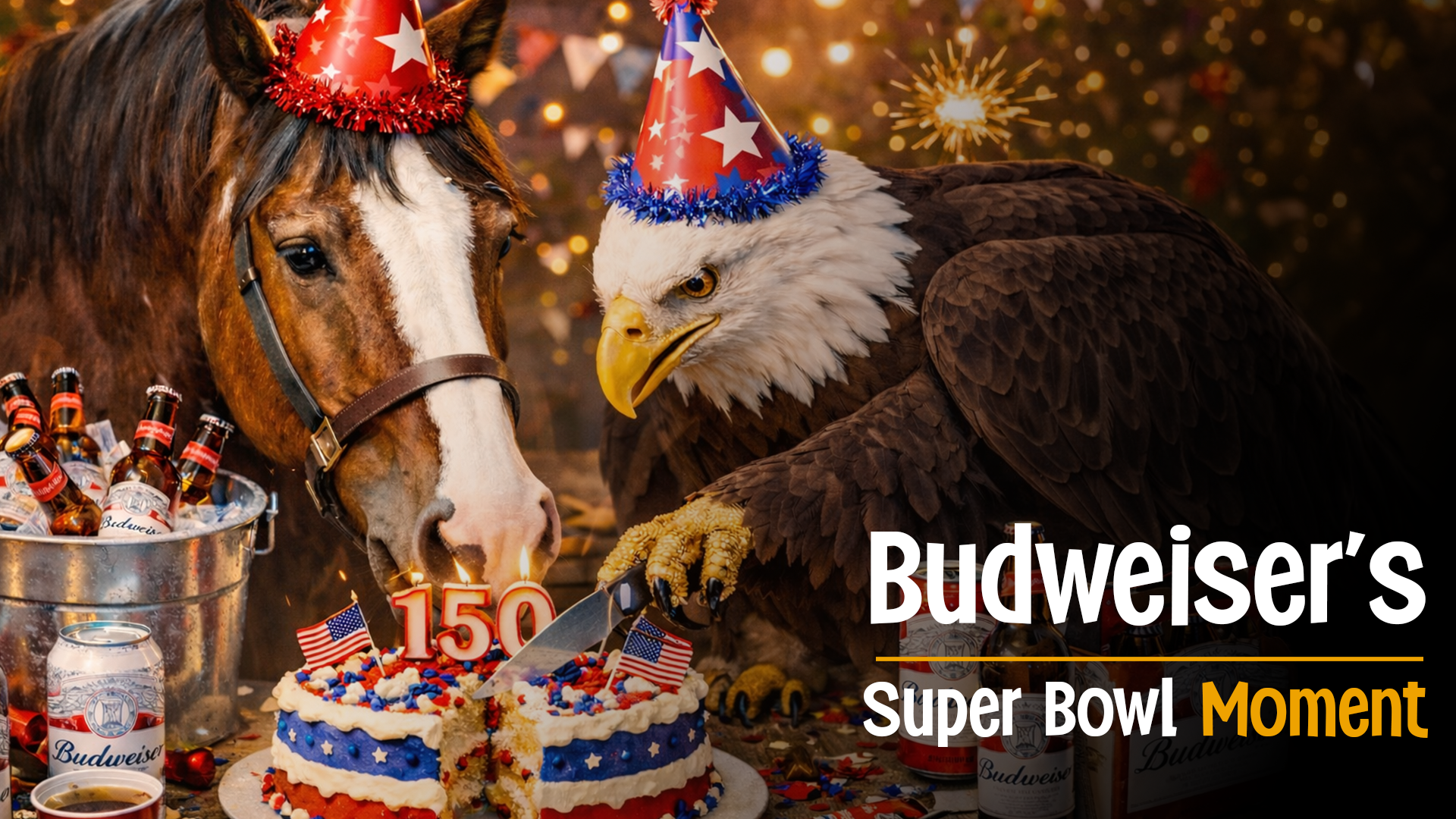
Budweiser’s Super Bowl 2026 ad, “American Icons,” tells a heartfelt story instead of going for shock or absurdity. In the 60-second ad, a young Clydesdale horse befriends a baby bald eagle who has fallen out of its nest. Over time, the two form a bond, growing up together through rain, snow, and struggle. The emotional pinnacle of the film comes as the now fully developed eagle soars off from the back of the horse as Lynyrd Skynyrd’s “Free Bird” plays in the background. The ad closes with “Made in America” and “For 150 Years, This Bud’s For You,” tying the story directly to Budweiser’s century-and-a-half legacy.
The point of the Budweiser ad is symbolic positioning. Budweiser employs the bald eagle, a universally known symbol, to strengthen its historical connection with America, tradition and heritage. It doesn’t explain the product or chase attention; instead, it signals continuity — that it has been part of the cultural fabric for generations and is here to stay.
Audience reaction reflected this difference. While many Super Bowl ads were discussed for their weirdness or spectacle, Budweiser’s ad was described as “classic,” “timeless,” and “what a Super Bowl ad should feel like.” The conversation around it focused on the brand, not just the execution.
Absurdity Without Meaning Is Not Strategy
Absurd advertising can be genius if it’s rooted in strong brand truth. Old Spice and Skittles have both successfully leveraged surrealism for many years to strengthen a strong, cohesive brand identity. Many other brands, like Duolingo also successfully use unhinged marketing stunts to drive brand engagement. In 2026, however, brand humour often feels untethered, used as a shortcut to attention rather than as an expression of brand positioning.
Many ads this year left viewers asking the same question: What was the point?
If consumers remember the weirdness instead of the brand promise, then the ad has failed at its most basic job.
In a Super Bowl commercial market crowded with noise, novelty alone is no longer enough. Memorability without meaning does not translate into trust, preference, or long-term brand equity.
Longevity Versus Virality
Many Super Bowl 2026 ads were designed for immediate reaction: social media clips, meme potential, short-term buzz. These ads may perform well in engagement metrics, but they tend to age quickly. What feels shocking or funny today often feels dated tomorrow.
Budweiser’s ad, by contrast, appears to have been built for longevity. It avoided cultural references, internet humour, and contemporary slang. As a result, it is far more likely to remain relevant in future retrospectives, brand reels, and anniversary montages.
This is the difference between a campaign and a brand statement
A Larger Reflection
Each strategy has trade-offs. Buzz and interruption tactics can generate immediate conversation. But clarity and narrative cohesion often leave stronger impressions long after the game has ended.
Marketers need to think carefully about their creative choices because these choices reflect their strategies. In 2026, marketing priorities changed more than usual across the industry. But Budweiser proved that a good, old-fashioned idea can still stand out in a cluttered marketplace.